HairChanger guide
Short Haircut Guide for Women
Compare pixies, French bobs, blunt bobs, and short shags by shape, maintenance, and grow-out.
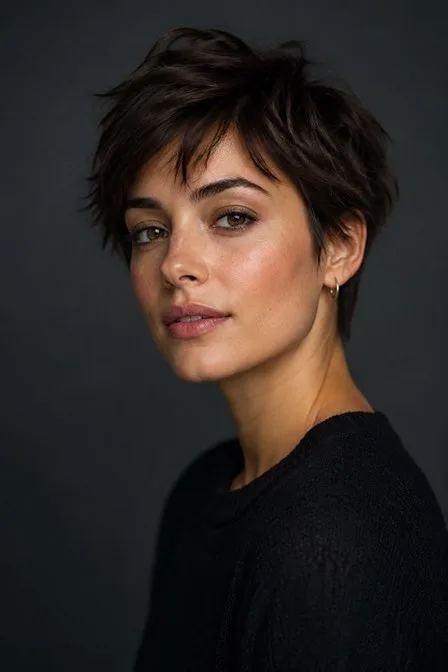
Compare silhouettes, not just length
A pixie follows the head closely and keeps customizable length on top. A French bob creates a compact jaw-level perimeter. A short shag builds movement through crown layers. A blunt bob uses a stronger one-length line. These cuts can all be called short, yet they frame the face, expose the neck, and grow out in very different ways.
Look at the back and sides
Most inspiration photos show the front, but short cuts depend heavily on the neckline, ear area, sideburn, and crown. Ask for references from several angles. Decide whether you want a soft natural neckline, a close taper, visible ears, or enough side length to tuck behind the ear.
Match maintenance to the cut
Very short shapes show growth quickly, even if morning styling takes only minutes. A pixie may need reshaping every month, while a bob can often go longer. Fringe also changes the schedule. If frequent appointments are difficult, choose a cut with a soft perimeter and an intentional grow-out.
Make the first cut adjustable
You do not need to choose the shortest version immediately. A longer pixie, bixie, or jaw-length bob offers room to refine after seeing how the hair responds. Keep the first fringe and side sections slightly longer, then adjust once the overall shape is visible and dry.