HairChanger guide
How to Choose a Hairstyle for Your Face Shape
Use face shape as a starting point without turning it into a restrictive rulebook.
Start with proportion, not a label
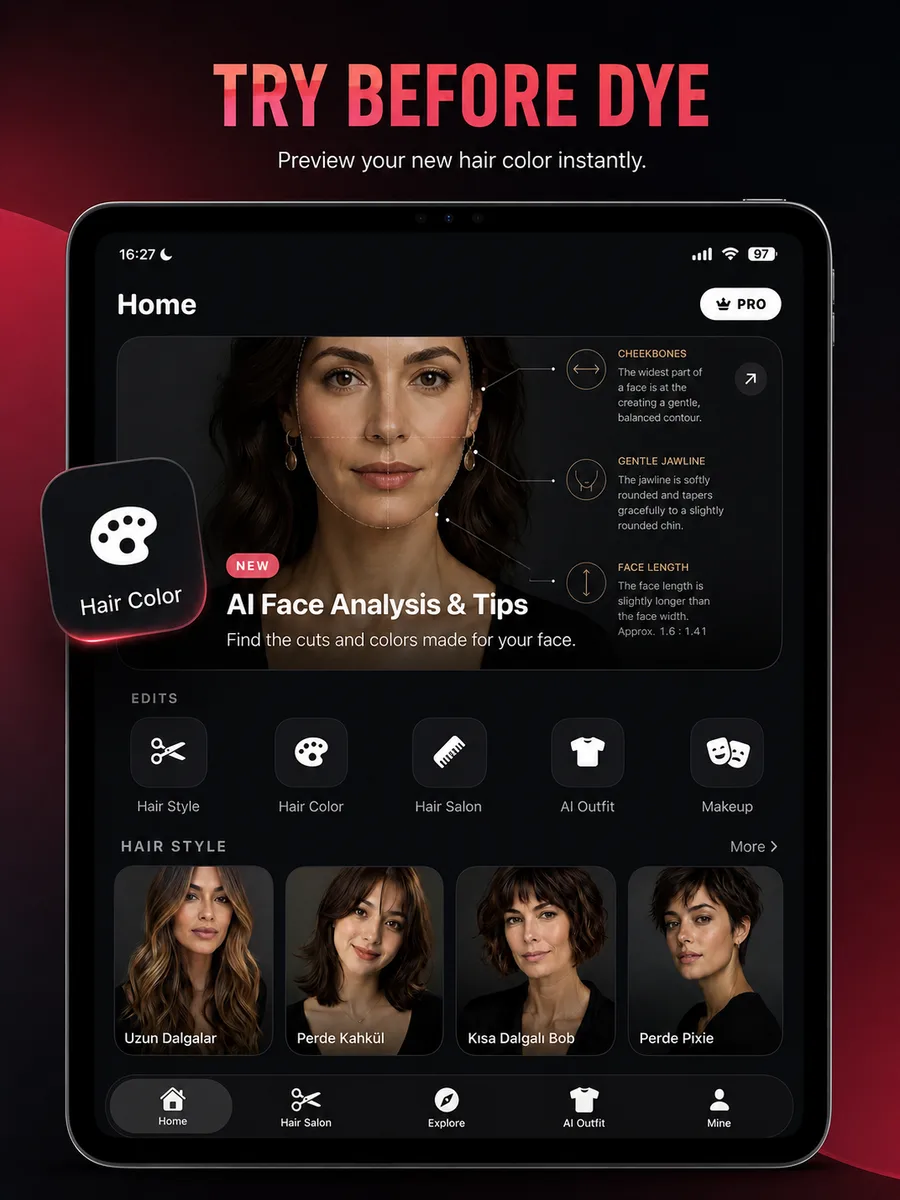
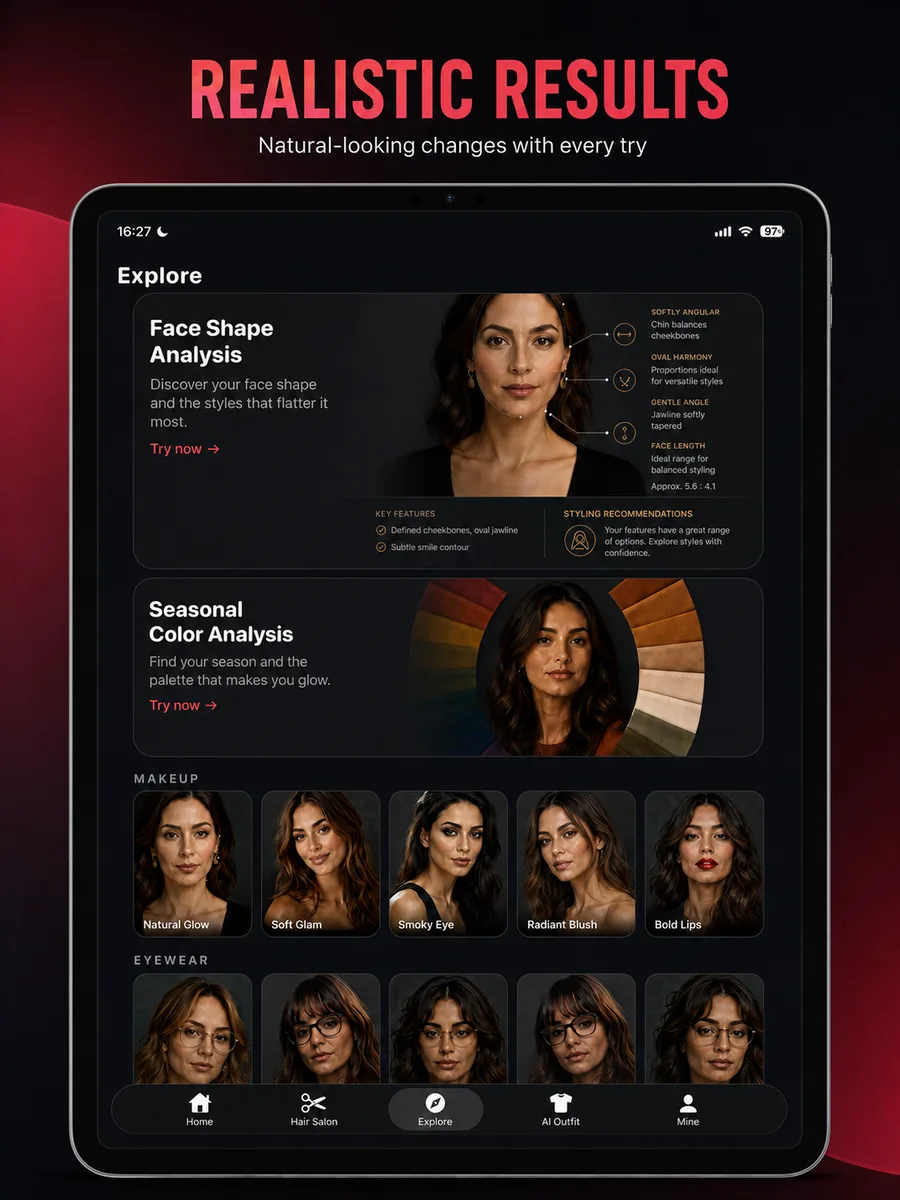
Look at three relationships: total face length compared with width, the widest horizontal area, and the shape of the jaw. Oval, round, square, heart, diamond, oblong, and triangle are shorthand for these patterns. Most people sit between two descriptions. The goal is not to force a perfect category; it is to notice where a hairstyle adds width, height, softness, or structure.
Understand the five controls
A haircut changes the frame around the face through a small set of controls. Fringe changes the visible forehead. A center or side part changes symmetry. Crown volume adds height. Side volume adds width. The perimeter draws a horizontal line near the cheek, jaw, collarbone, or shoulders. Once you understand these controls, recommendations become easier to adapt.
- Fringe length and density
- Part position
- Crown height
- Side volume
- Where the main perimeter ends
Decide whether to balance or emphasize
Traditional advice often assumes everyone wants an oval effect. That is not always true. A square face can look excellent with a sharp bob that emphasizes the jaw. A round face can wear a buzz cut that exposes its natural outline. Choose whether you want to soften, balance, or highlight your structure before filtering styles.
Test the entire look
Face shape is only one part of the image. Glasses, beard shape, earrings, neckline, color contrast, and daily styling affect the result. Preview the hairstyle with the accessories and parting you actually use. Then ask whether the maintenance fits your routine, not just whether the screenshot looks good.