Seven proportion guides
Use face shape as a starting point.
Understand the visible effect of fringe, parting, crown height, side volume, and perimeter placement without treating a label as a rule.
Face shape describes proportion: total length, the widest horizontal area, and jaw structure. Most people sit between categories. The useful question is not which styles are allowed, but what each haircut changes around the forehead, cheeks, jaw, and overall length.
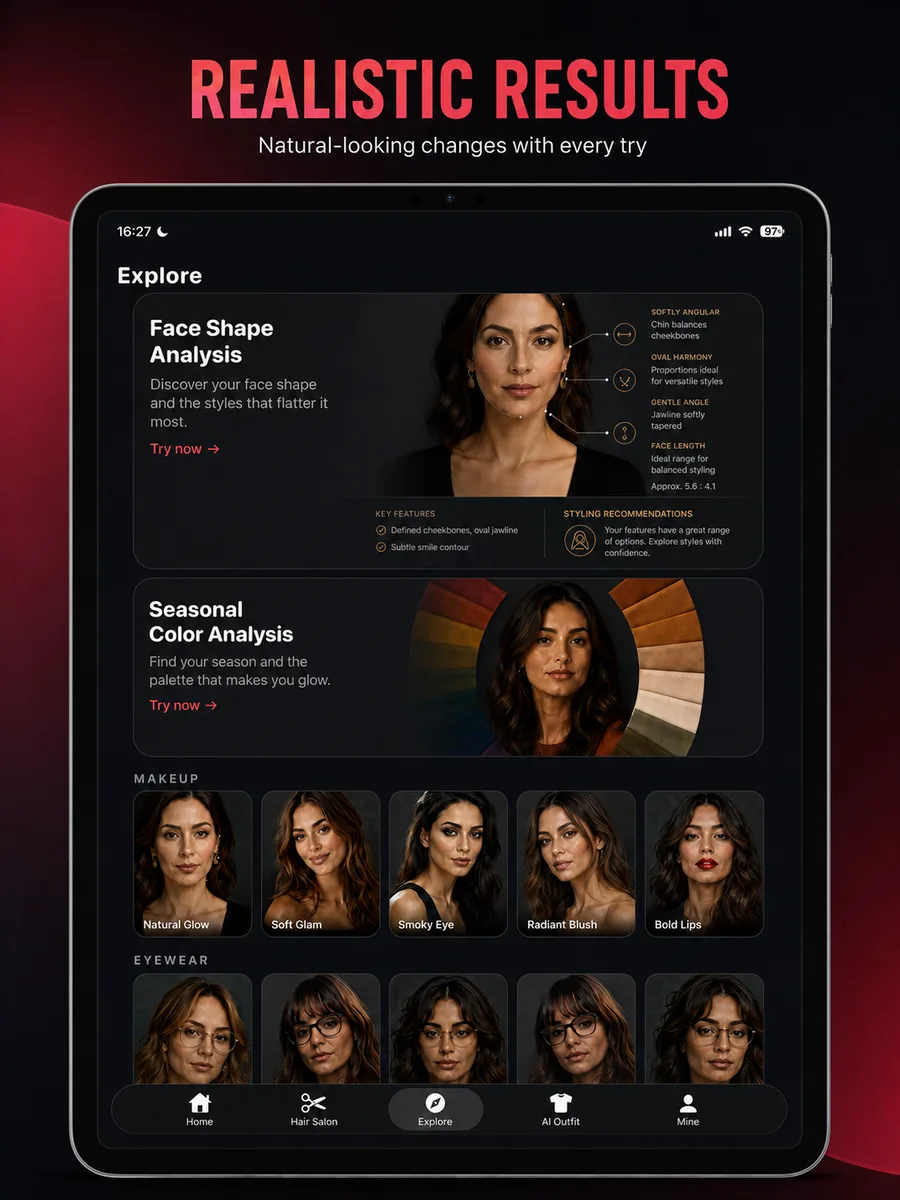
Explore face-shape guides
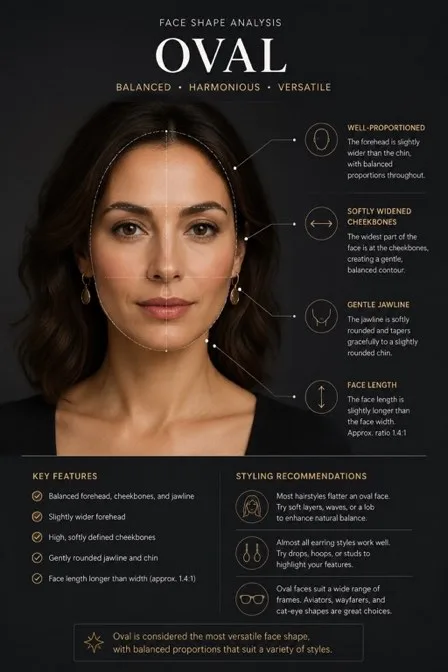
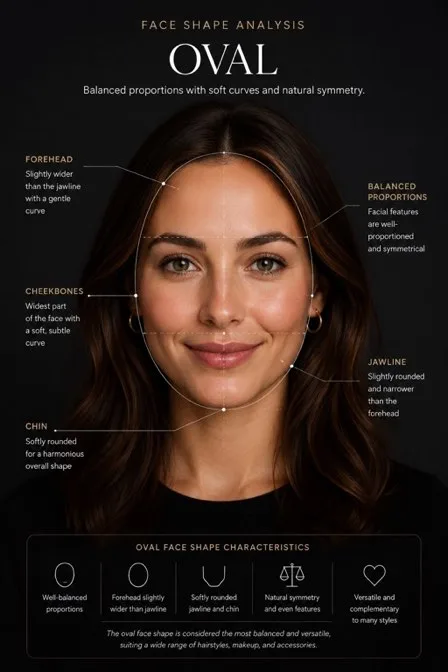
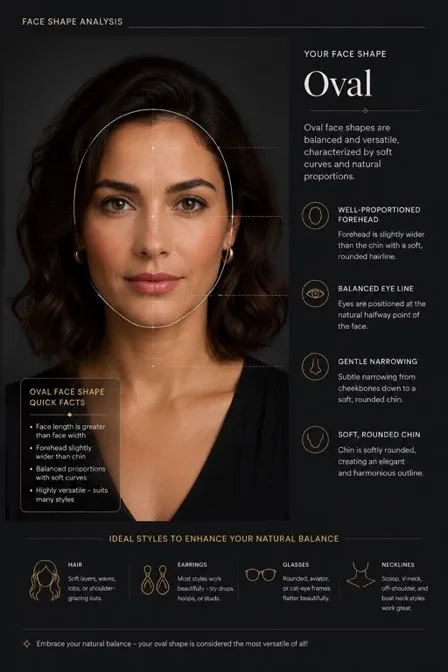
Oval Face Shape
Balanced width with a face length that is moderately greater than the cheekbone width.
Round Face Shape
Similar face length and width with curved cheeks and a softly rounded jaw.
Square Face Shape
A broad forehead and jaw with clear angles and similar overall length and width.
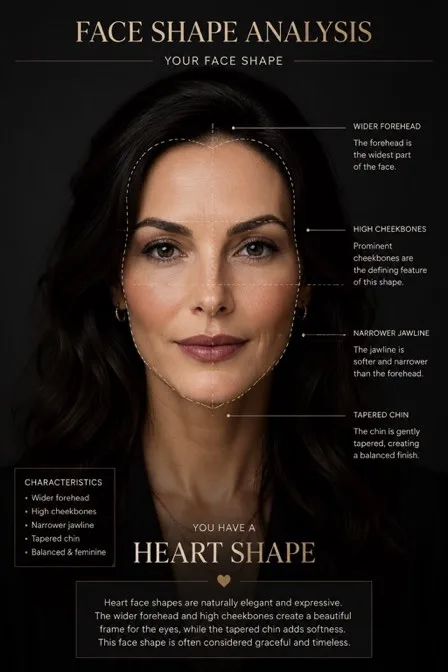
Heart Face Shape
A broader upper face that narrows toward a smaller, sometimes pointed chin.
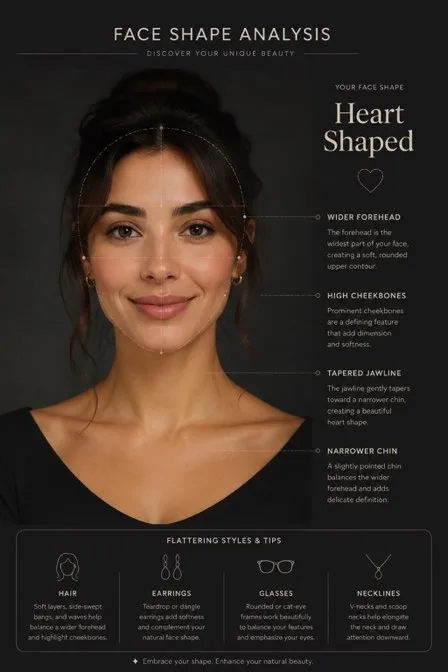
Diamond Face Shape
Prominent cheekbone width with a narrower forehead and jaw.
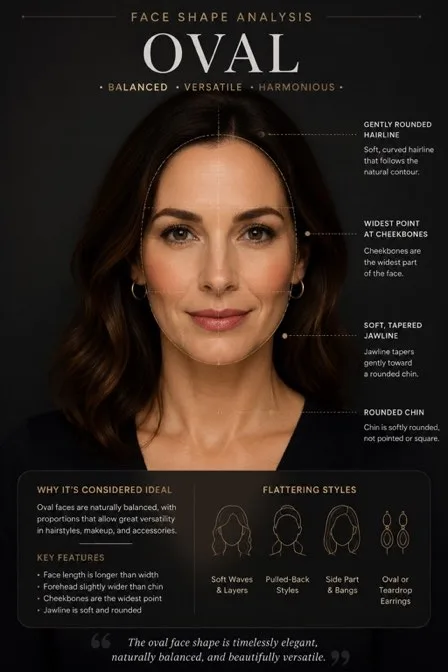
Oblong Face Shape
Noticeably more length than width, often with relatively straight side lines.
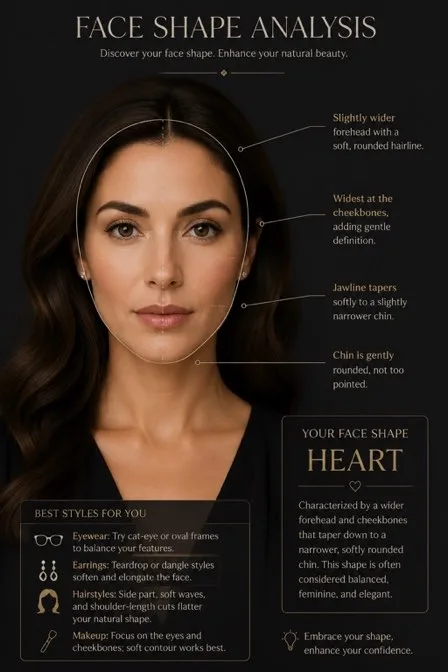
Triangle Face Shape
A jawline that appears wider than the cheekbones and forehead.
Read the guides correctly
Recommendations describe visual effects
Crown height adds length. Side volume adds width. A blunt perimeter creates a horizontal line. Fringe changes the visible forehead. These effects can balance a proportion or deliberately emphasize it.
Texture and routine still lead
A face-shape suggestion is only useful if the cut works with density, curl pattern, hairline, glasses, facial hair, styling time, and maintenance. Preview the complete look, then adapt it with a professional.
Explore your proportions
Test the effect on your own photo.
Use HairChanger to compare haircuts, colors, and complete style directions before making a permanent change.
Download on the App Store