HairChanger guide
Low-Maintenance Hairstyles: What That Really Means
Choose a haircut based on morning effort, salon frequency, product use, and grow-out rather than a misleading label.

Define which maintenance you want to reduce
A buzz cut takes almost no morning styling but may need frequent clipper visits. Long one-length hair can go months between cuts but may require drying, detangling, and conditioning. A vivid pastel color may sit on a simple haircut yet demand regular refreshes. Separate daily time, salon frequency, and color care before choosing.
Work with the natural pattern
A cut feels easiest when its intended finish is close to what the hair does naturally. If straight hair must be curled every day to show the shape, or curls must be fully straightened to reveal the perimeter, the style is not low maintenance for that person. Ask to see references with similar texture.
Choose forgiving structure
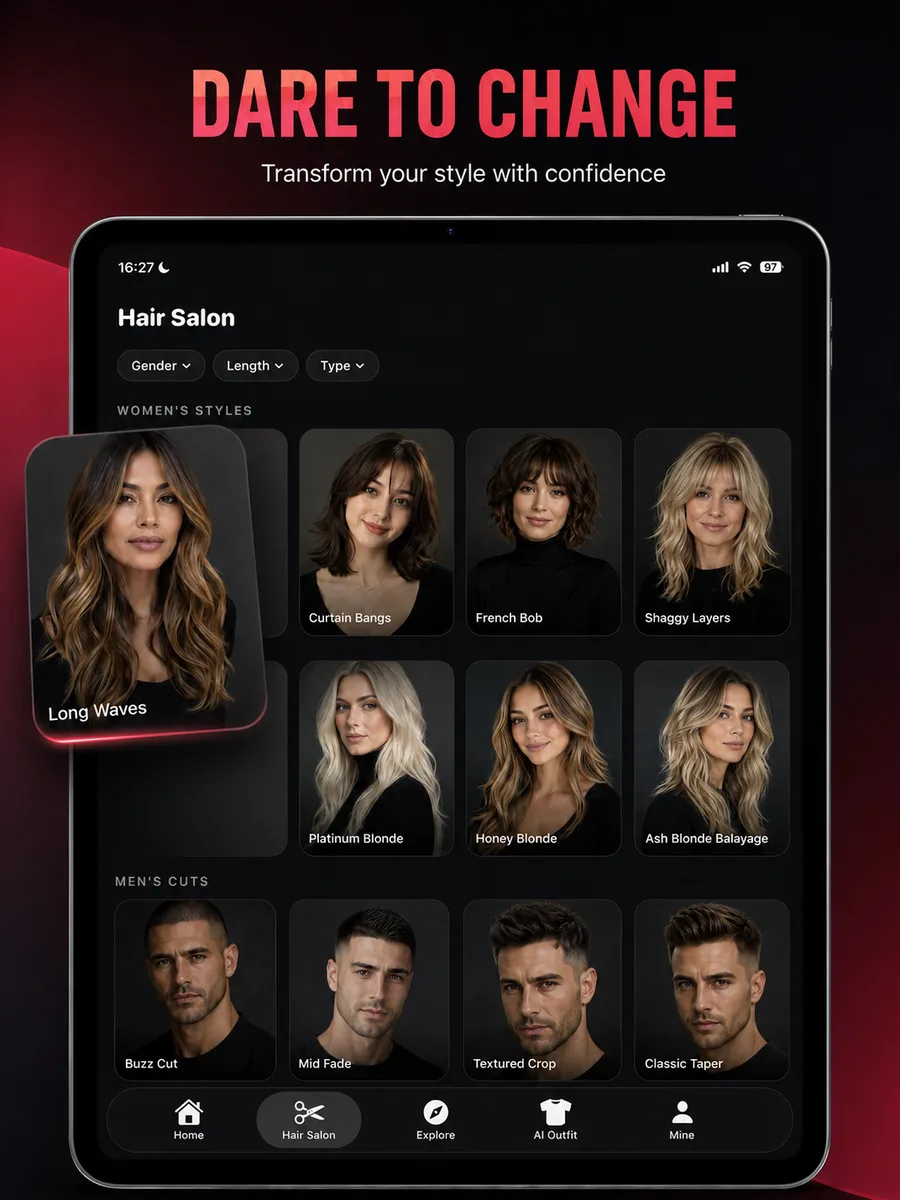
Blunt lobs, long blended layers, soft shags, crew cuts, low tapers, and natural curls can all be practical when matched correctly. Very precise fringe, sharp bobs, skin fades, platinum blonde, and graphic undercuts show growth quickly. That does not make them poor choices; it simply changes the schedule.
Run a realistic weekly test
Before committing, write down how many days you air-dry, use heat, tie hair back, exercise, wear a helmet, or need a polished work finish. Preview the cut, then ask how it behaves in each situation. The useful style is the one that fits the ordinary week, not only the salon photo.