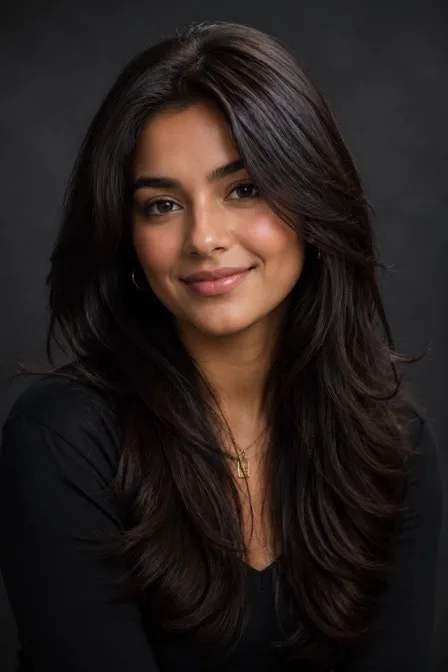
Women's hairstyles
Butterfly Layers
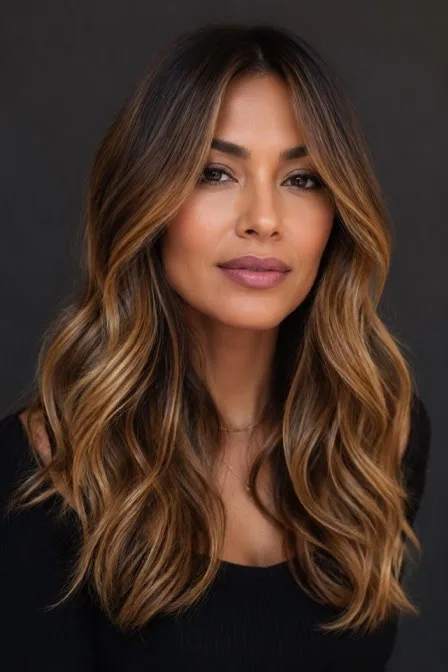
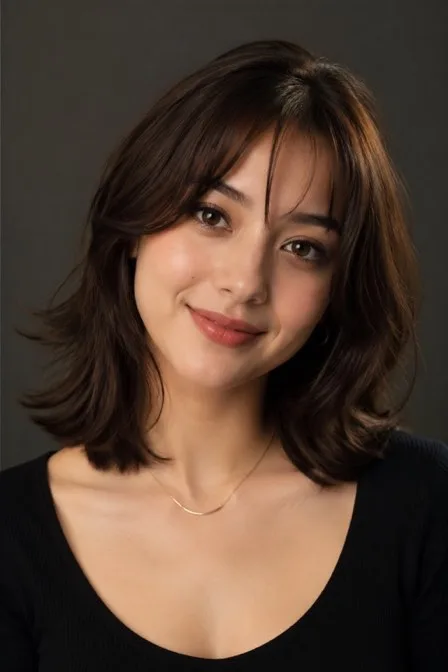
Shorter face-framing layers over long lengths for movement without a short cut.
Butterfly layers create two visible zones: shorter, bouncy layers around the face and upper body, then longer layers that preserve the overall length. The name comes from the outward sweep of the face-framing sections. The style is most convincing when the layers remain blended and the ends retain enough density to avoid a thin, feathery perimeter.
| Length | Long |
|---|---|
| Texture | Straight, wavy, or loose-curly hair |
| Face-shape starting points | Oval, Round, Square, Heart |
| Maintenance | Medium. Refresh the face frame every 8 to 12 weeks. |
Who may want to try butterfly layers?
This style is a useful direction for people interested in keeping long hair, adding upper-body movement, blowout styling. Face-shape labels are only a starting point; the strongest choice also accounts for density, growth pattern, natural texture, styling time, and how often you want to return for maintenance.
- Keeping long hair
- Adding upper-body movement
- Blowout styling
What to ask for at the salon
Ask for long butterfly layers with the shortest face-framing point around the cheekbone or chin and a full lower perimeter.
Bring a front, side, and back reference when possible. Point to the exact perimeter, fringe position, top height, or side length you want to preserve. Ask the stylist to explain how the idea should be adapted to your real hair rather than copying the image without adjustment.
How to style it
- Roll face-framing sections away from the face while they cool.
- Lift at the roots, but keep the longest ends smooth to show the two-level shape.
- Use wide sections when curling so the result reads as volume, not ringlets.
What to consider before the cut
The signature shape appears most clearly after a blowout. If you mainly air-dry, ask for a version adapted to your natural texture.
Previewing the silhouette can make the decision clearer, but it cannot predict exact shrinkage, chemical limits, cowlick behavior, or the finish produced by a specific salon technique.