Women's hairstyles
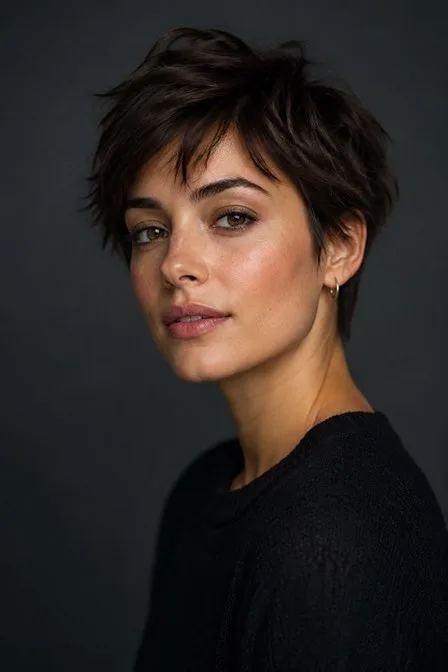
Pixie Cut
A close, expressive short cut with customizable length through the top and fringe.
A pixie cut removes most length around the sides and back while preserving enough hair on top to create direction. It can be soft and tapered, textured and piecey, or sleek and sculpted. The key decision is not simply going short; it is choosing where to keep weight so the cut works with your growth pattern, density, and preferred styling routine.
| Length | Very short |
|---|---|
| Texture | Most textures with tailored cutting |
| Face-shape starting points | Oval, Heart, Square, Round |
| Maintenance | High for shape. Most pixies need attention every 4 to 7 weeks. |
Who may want to try pixie cut?
This style is a useful direction for people interested in a defined short silhouette, showing facial features, fast daily styling. Face-shape labels are only a starting point; the strongest choice also accounts for density, growth pattern, natural texture, styling time, and how often you want to return for maintenance.
- A defined short silhouette
- Showing facial features
- Fast daily styling
What to ask for at the salon
Ask for a tapered pixie with the top length and fringe direction chosen around your natural growth. Bring references that show the sides, back, and front.
Bring a front, side, and back reference when possible. Point to the exact perimeter, fringe position, top height, or side length you want to preserve. Ask the stylist to explain how the idea should be adapted to your real hair rather than copying the image without adjustment.
How to style it
- Use a pea-sized amount of paste and warm it fully between your hands.
- Direct the top while blow-drying instead of trying to force it after it is dry.
- Use fingertips to separate sections; a comb can make the finish too rigid.
What to consider before the cut
A pixie is low effort in the morning but high commitment to regular reshaping. Discuss the grow-out plan before the first major cut.
Previewing the silhouette can make the decision clearer, but it cannot predict exact shrinkage, chemical limits, cowlick behavior, or the finish produced by a specific salon technique.